
JPL
Careers
Education
Science & Technology
JPL Logo
JPL Logo
Solar System
.1 min read

NASA Engineers Help Prolong Voyager 2’s Science Mission

Jet Propulsion Laboratory https://www.jpl.nasa.gov/ Aug. 4, 2026
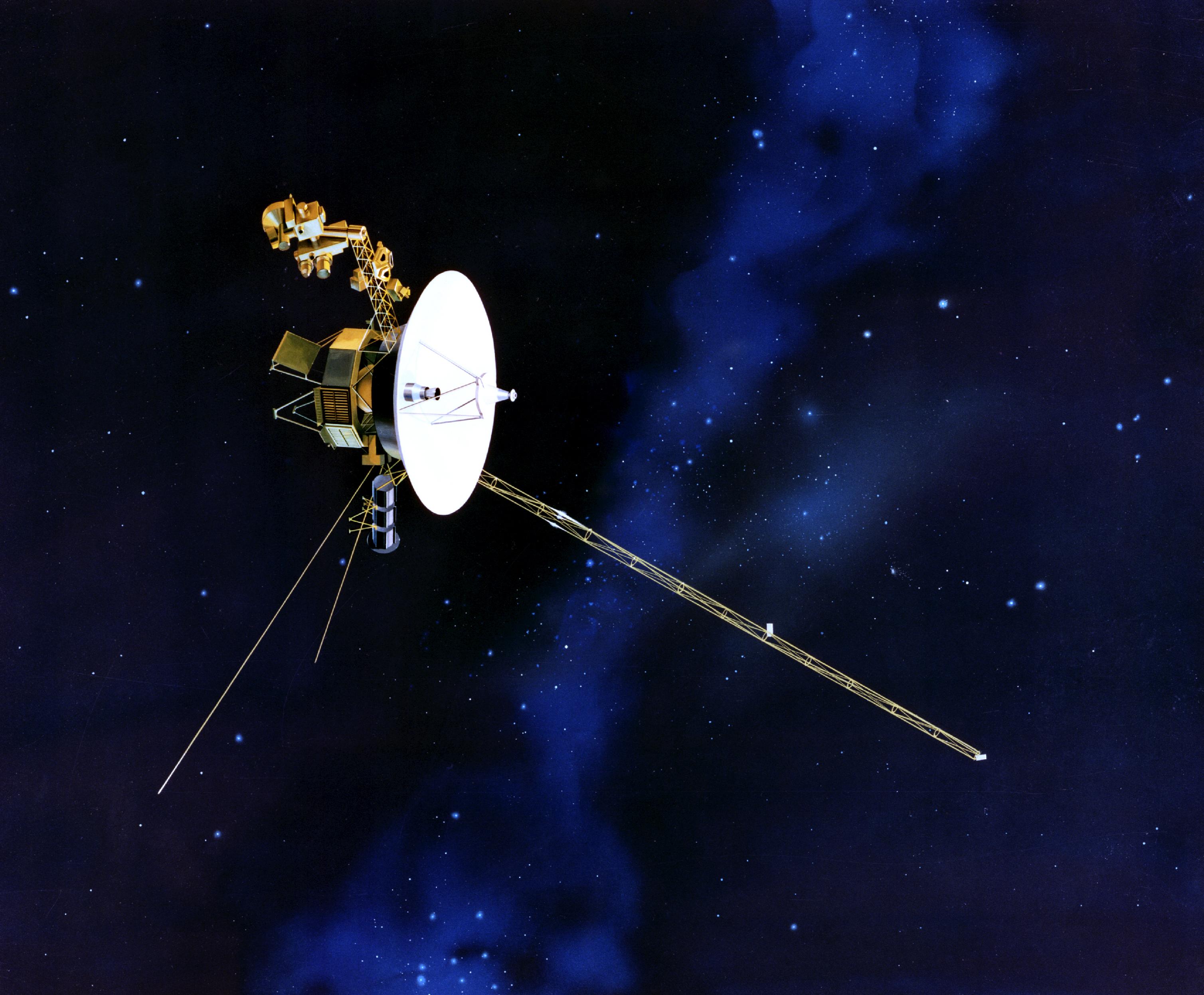
An illustration of NASA’s Voyager 2 spacecraft: a large, white dish-shaped high-gain antenna pointed toward the right, with long instrument booms and scientific sensors extending from its body, against a black and blue background with visible stars.

NASA’s Voyager 2 spacecraft, depicted in this artist’s concept, has enough power to continue operating three science instruments in interstellar space longer than anticipated thanks to some clever engineering by the mission team.

Credit: NASA/JPL-Caltech

By switching off certain powered devices and substituting them with lower-powered alternatives, the team has been able to avoid turning off more science instruments.

Nicknamed the “Big Bang,” the effort involved simultaneously turning off certain powered devices and substituting them with lower-power alternatives while ensuring the spacecraft remains warm enough to operate.

The Voyagers get their power from radioisotope thermoelectric generators, devices that convert heat from decaying plutonium into electricity. Due to the plutonium supply continually depleting, both probes lose about 4 watts of power each year. After almost a half-century since launch, the spacecraft power margins have grown razor thin, requiring the team to conserve energy by shutting off non-essential devices and systems. The savings from the Big Bang should provide power to keep its three instruments operating for at least an extra year.

Read more here.

Related News

Mars.

NASA’s Perseverance Rover Watches Earth Vanish Behind Martian Moon

Solar System.

NASA’s Juno Takes Temperature of Jupiter’s Fiery Moon Io

Solar System.

NASA’s Psyche Mission Delivers Mars Flyby Data, Time-lapse Video

Solar System.

NASA Testing Advanced Capabilities for Moon, Mars Rovers

Solar System.

NASA’s Psyche Mission Aces Mars Flyby, Targets Metal-Rich Asteroid

Mars.

NASA’s Perseverance Rover Snaps Selfie in Mars’ Western Frontier

Mars.

NASA’s Perseverance, Curiosity Panoramas Capture Two Sides of Mars

Mars.

NASA’s Curiosity Finds Organic Molecules Never Seen Before on Mars

Solar System.

NASA Shuts Off Instrument on Voyager 1 to Keep Spacecraft Operating

Asteroids and Comets.

NASA’s DART Mission Changed Orbit of Asteroid Didymos Around Sun

About JPL
Who We Are
Directors
Careers
Internships
The JPL Story
JPL Achievements
Documentary Series
JPL Annual Report
Executive Council
Missions
Current
Past
Future
All
News
All
Earth
Solar System
Stars and Galaxies
Eyes on the News
Subscribe to JPL News
Galleries
Images
Videos
Audio
Podcasts
Apps
Visions of the Future
Slice of History
Robotics at JPL
Events
Lecture Series
Speakers Bureau
Calendar
Explore JPL
Visit
Public Tours
Virtual Tour
Directions and Maps
Explore JPL
Topics
JPL Life
Solar System
Mars
Earth
Climate Change
Exoplanets
Stars and Galaxies
Robotics
More
Asteroid Watch
NASA's Eyes Visualizations
Universe - Internal Newsletter
Social Media
Accessibility at NASA
Contact Us
Get the Latest from JPL
Follow Us

JPL is a federally funded research and development center managed for NASA by Caltech.

More from JPL
Careers
Education
Science & Technology
Acquisition
JPL Store
Careers
Education
Science & Technology
Acquisition
JPL Store
Related NASA Sites
Basics of Spaceflight
NASA Kids Science - Earth
Earth / Global Climate Change
Exoplanet Exploration
Mars Exploration
Solar System Exploration
Space Place
NASA's Eyes Visualization Project
Voyager Interstellar Mission
NASA
Caltech
Privacy
Image Policy
FAQ
Feedback
Version: v3.2.0 - 54b6266
Site Managers:Emilee Richardson, Alicia Cermak
Site Editors:Steve Carney
CL#:21-0018